
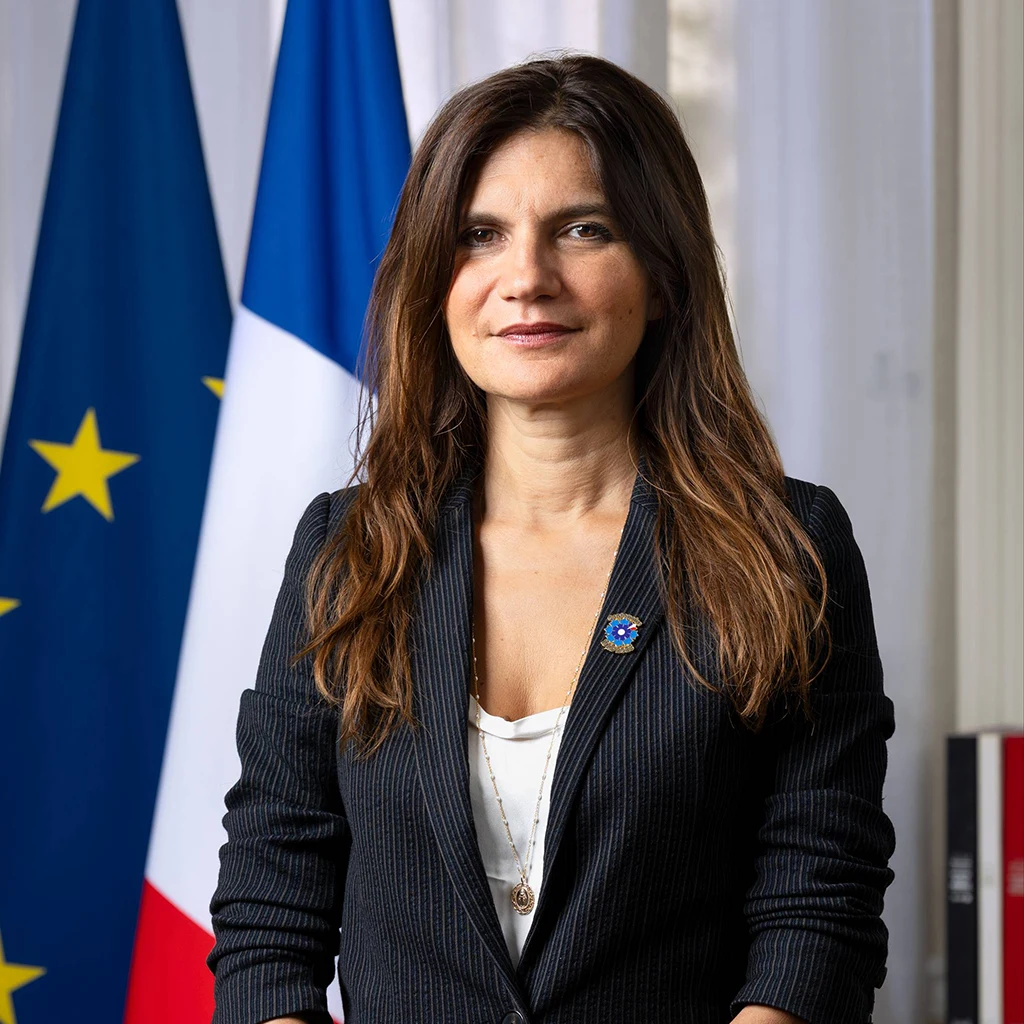
4 questions for Alice Rufo
Minister Delegate to the Minister of the Armed Forces and Veterans
You launched an initiative to bring together defence start-ups and facilitate dialogue with the Ministry for the Armed Forces and other industry stakeholders. How is it progressing, particularly in the naval sector?
Euronaval will provide an opportunity to meet some of these start-ups, and I’ll also be speaking with several of them at a lunch organised during the event.
Can you give us some examples of progress made by start-ups in the naval defence sector?
Several companies involved in the Defence Start-up Initiative are developing technologies that address the needs of our naval forces, and some are exhibiting here at Euronaval. In the NewSpace sector, companies such as Unseenlabs and Kinéis are developing satellite capabilities that improve maritime surveillance, helping to detect and track vessels, including those seeking to evade conventional surveillance systems. This is particularly valuable in combating trafficking and other illegal activities at sea. In naval robotics, Exail is developing unmanned surface and underwater systems capable of detecting, identifying and neutralising mines that pose a threat to ships and shipping lanes. These technologies are being deployed under a Belgian-Dutch cooperation programme involving Exail and Naval Group, which will equip both countries’ navies with new mine countermeasures vessels.
What do you see as the main challenges facing the defence industry in the coming years?
I see four main challenges. The first is ramping up industrial production. We need to produce more, produce faster, secure our supply chains and strengthen the overall resilience of our Defence Technological and Industrial Base (DTIB). The second is keeping pace with innovation. The war in Ukraine and growing tensions in the Middle East have shown just how quickly technologies and operational tactics are evolving. We need to integrate advances in areas such as drones, unmanned systems, AI and electronic warfare into our operational capabilities much faster. The third challenge is scaling up, an issue that comes up repeatedly in my talks with companies involved in the Defence Start-up Initiative. We know how to develop high-performance prototypes, but that’s not enough. We need to accelerate testing, industrialisation and series production, particularly by fostering closer cooperation between start-ups, SMEs, mid-sized companies and major industrial groups. Finally, European cooperation and access to international markets will be crucial in enabling our defence companies to achieve the scale they need to grow and pool investment.
What message would you like to send to the defence industry at Euronaval?
First, I want to recognise the excellence of France’s naval defence industry. It is one of the pillars of our sovereignty and contributes to France’s international standing. We have exceptional industrial and technological expertise that we must preserve and strengthen. We also need to continue ramping up production. The operational requirements are clear, the financial commitment made under the Defence Spending Law (LPM) adopted in 2023 and updated this year is substantial, and the orders are coming through. Industry must now invest, expand production capacity and take the necessary risks to meet the needs of our armed forces, in a spirit of shared responsibility with the State. We therefore need to accelerate innovation and foster closer cooperation between major industrial groups and start-ups. Technology is advancing at an unprecedented pace. I saw this again during my visit to Ukraine, where new developments in drone technology are emerging almost every month. We must therefore make it easier to integrate technologies developed by our start-ups into the systems and major defence programmes led by larger companies. The two should complement each other, not compete. Finally, we must harness European cooperation to strengthen our industrial capabilities. Given the scale of the defence and technological challenges we face, we need closer partnerships between European manufacturers, more joint programmes and stronger European supply chains. This is essential if we are to achieve the critical mass needed to remain competitive in export markets, reduce our dependencies and strengthen our sovereignty at European level.
- Aude Leroy


