
- 3
BPCE is banking on a resilient supply chain and broader financing
To respond to growing demand from the defence industry, BPCE is strengthening its organisation. Emmanuel Georges Michelin, BPCE’s deputy director of public affairs and defence liaison, spoke with us about what he sees as the key issue: identifying supply chain stakeholders and making sure they have access to capital.
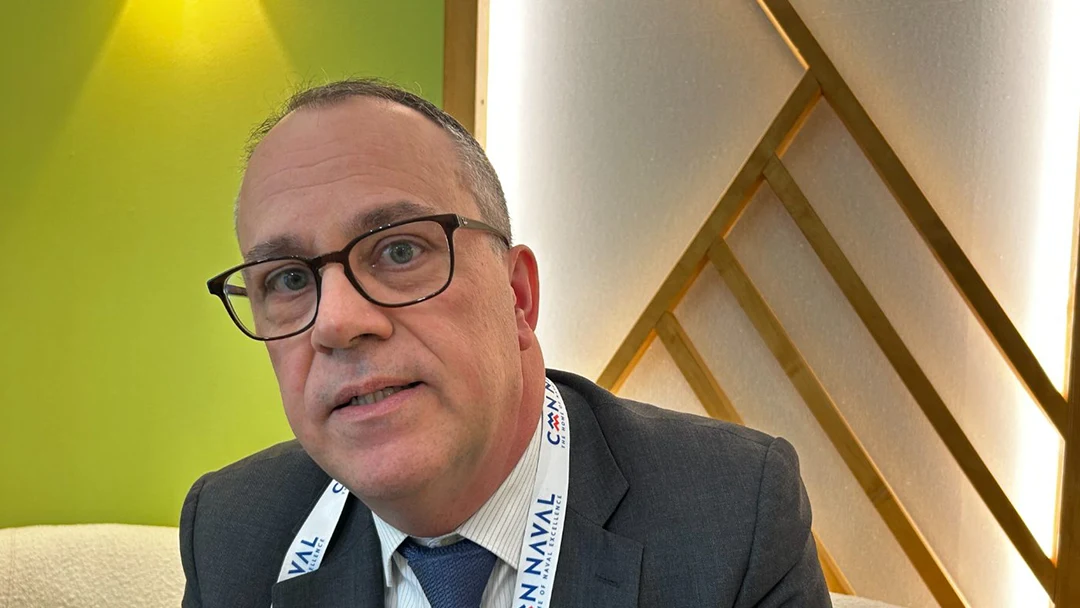
Emmanuel Georges Michelin, deputy director of public affairs and defence liaison officer, BPCE.
© Pascal Samama
The big prime contractors are not the only companies concerned by the growth of the defence industry. A wide network of contractors – some little-known within the industry – supply components, equipment, and know-how crucial to the production of weapons systems. This ecosystem is made up of companies of all sizes located in every region of France.
BPCE, which has been serving defence contractors for a long time, has now structured its operations to strengthen ties with these companies. For around a year now, BPCE has deployed defence liaison officers across its regional networks. Their role is to serve as the point of contact for both sales reps and customers.
“Defence is everywhere,” said Michelin. The scope of the defence technological and industrial base (DTIB) is actually getting larger as companies that have traditionally operated in civilian markets begin to address military applications. Hybrid models are becoming increasingly common in the supply chain.
The dual-use model and exports contribute to resilience
According to Michelin, diversification is a key factor in economic strength. He also advises companies to expand internationally. Defence, civilian markets, and exports are the three pillars of the model.
“This kind of diversification serves as a buffer against fluctuations in each market. If military orders slow down due to budget delays, for example, civilian or international markets can make up the difference. Likewise, a downturn in the civilian market can be offset by defence contracts and exports,” he said. “With us providing financing, diversified companies can absorb the ups and downs more easily. This is extremely important to build a resilient defence industry.”
The strategy Michelin recommends is also ideal for the European market. Unlike the United States, whose domestic market is large enough to support certain industrial programmes, European companies must rely more heavily on exports to balance their business models.
Faster production and a worsening geostrategic environment make this need even more pressing. A sufficiently diversified supply chain has become a core issue for both companies and their financers.
Financing and advice for companies
BPCE offers more than traditional bank loans; it also provides guarantees and solutions designed to support industrial investment. This includes solutions developed to meet the unique needs of the defence industry. BPCE Partners Conseil, created in partnership with Eurogroup, supports business leaders with their strategic projects, providing financing, succession, restructuring, and export consulting.
Business succession is an especially sensitive issue for an industry with many SMEs and family-run businesses, some with strategic industrial expertise. BPCE can also leverage EU funding programmes. It was the first bank to receive a €30 million funding package from the European Investment Bank (EIB) to finance companies in the defence supply chain.
A counter-guarantee from the EIB covers part of the risk, allowing the bank to finance more companies. The initial €30 million package is also likely to serve as leverage for additional financing. According to Michelin, French banks are currently estimated to have around €50 billion in outstanding loans to DTIB companies.
Identifying companies below the radar
One of the key challenges for BPCE in the coming years will be finding out more about the companies that make up less visible parts of the supply chain. With its regional branches and customers from corporations to start-ups across the industrial sector, BPCE highlights its unique position. In-depth knowledge of local business communities is an asset when it comes to identifying companies that could contribute to defence capacity building. Investors are already familiar with the big prime contractors – but not all their suppliers and subcontractors.
“Funds mainly look at well-known companies first. Then come the others – the smaller, lesser-known companies,” said Michelin.
So, bank financing is not necessarily the main hurdle. “It isn’t a matter of resources. We have the resources, we lend, and we support our customers. The question that is more likely to come up is equity financing,” he said. “Certain innovation projects, projects to expand production capacity, and projects to support business growth require equity.”
But before you can invest, you must know who the companies are and understand what they do in the defence value chain. This is a job that must be done together, both with defence industry organisations like GICAN, GICAT, and GIFAS, but also with the French Defence procurement and technology agency (DGA) and government agencies.
Looking beyond the big, well-established prime contractors, the next challenge will be to support the growth of Tier 2 contractors – some from the civilian market – that could become crucial links in a more resilient French DTIB supply chain. For banks to direct financing appropriately and
- Pascal Samama


