
- 2
AsTRA-LAS: navigating uncertainty in naval combat
Eviden’s AsTRA-LAS is a digital solution designed to help naval officers build a clearer picture of the tactical situation and assess their options. Currently being trialled by the French Navy, it combines data visualisation, artificial intelligence and an open architecture.
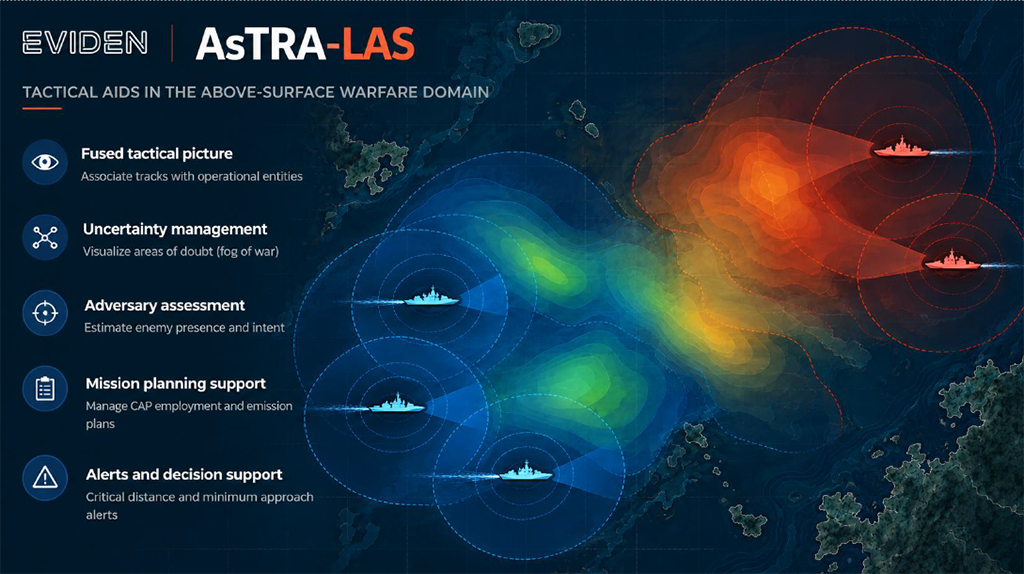
Computer-generated image illustrating the capabilities of AsTRA-LAS, Eviden’s tactical decision-support solution for naval operations.
© Eviden
In naval combat, decisions must be made quickly, often with only a partial picture of the operational environment and information from multiple, fragmented sources, while the adversary seeks to conceal its intentions. Officers and operators engaged in anti-surface warfare (ASuW) and air defence (AD) must analyse this mass of data to assess threats, anticipate developments and determine a course of action. This is the challenge that French company Eviden aims to meet with AsTRA-LAS.
“AsTRA-LAS is designed to reduce operators’ cognitive workload by highlighting information relevant to decision-making, such as evolving threats, risk areas, potential for detection, the balance of forces and tactical opportunities,” explains Sylvain Faya, Naval Military Advisor at Eviden.
From data to tactical insight
AsTRA-LAS does more than simply display available information on a screen. It brings together and contextualises data from multiple sources, including a combat management system developed by a major naval equipment manufacturer and tactical data links (TDLs), giving operators a clear, actionable picture of the tactical situation. The solution has two main objectives: to improve tactical visualisation and use AI to suggest possible courses of action for operators to evaluate.
However, decision-making remains firmly in human hands. “AI supports analysis and decision-making, but it does not replace the operator,” explains the former French Navy officer. AsTRA-LAS operates separately from the combat management system, which retains its central role in the sensor-to-shooter chain.
An open architecture designed to evolve with sailors
Integrating technologies developed by specialist partners is another key element of Eviden’s approach. Racine Group draws on open-source intelligence (OSINT) to help improve knowledge of the maritime environment, while HawAI.tech provides AI tools to support recommendations for possible courses of action. By combining its own technologies with external innovations and solutions developed by naval personnel themselves, Eviden can rapidly adapt the system’s capabilities.
Trials of AsTRA-LAS with the French Navy are now getting underway. User feedback will help assess the operational value of its functions and refine the user interface and presentation of information. “The ability to integrate changes in short cycles is essential to ensuring that systems evolve rapidly and that the French Navy has the agility it needs in an increasingly demanding environment,” adds Sylvain Faya. “AsTRA-LAS is not the only innovative product on display at Eviden’s stand at Euronaval. Come and discover the others!” he concludes.
- Linda Verhaeghe


