
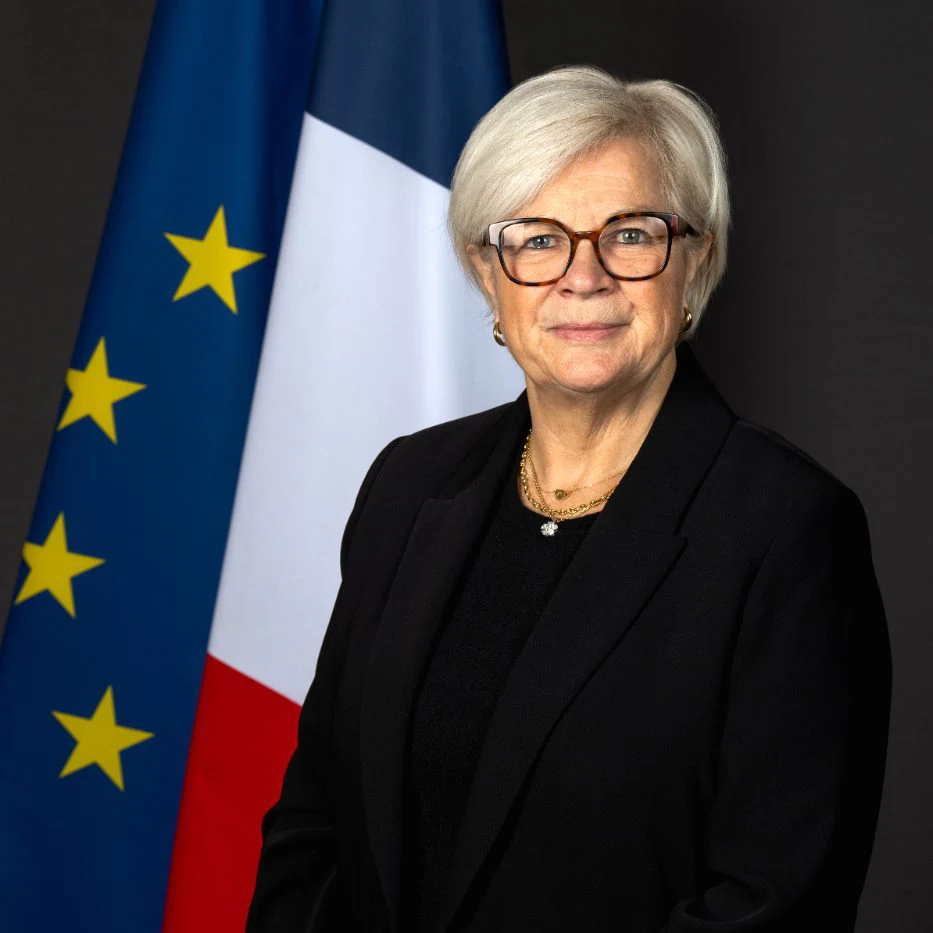
Three questions for Catherine Vautrin
Minister of the Armed Forces and Veterans
As Minister for the Armed Forces, what do you see as the two main challenges facing France’s naval sector today?
First, we must preserve our world-class expertise in nuclear propulsion. Our nuclear attack submarines (SSNs), nuclear ballistic missile submarines (SSBNs) and aircraft carrier are all equipped with steam supply systems, providing the stealth and endurance essential to our nuclear deterrent. Our deterrent is the result of decades of investment and research, drawing on industrial, scientific and military skills. Preserving this highly specialised know-how and passing it on to future generations is a major challenge, both for industry, because the ability to build these vessels can never be taken for granted, and for our sailors, because these skills are rare and very much in demand.
Our second challenge is to maintain operational superiority by anticipating technological breakthroughs and integrating them rapidly, ensuring that we turn potential challenges into operational advantages. This is why the adoption of the 2027 budget is so important. We plan to order naval unmanned aircraft systems (UASs) and allocate €1.4 billion to innovation, particularly to advance robotics, embedded AI and new materials.
How important is the French Navy to France?
Four hundred years ago, Richelieu’s message was clear: a nation that wishes to remain free must be able to operate at sea. That was when the French Navy was created.
Today, the French Navy plays a vital role in safeguarding our sovereignty and freedom every day. Its SSBNs guarantee our second-strike capability in the event of a surprise attack. The Navy protects our maritime areas, both around mainland France and in our overseas territories, including our exclusive economic zone (EEZ), the second largest in the world. It defends our interests wherever they lie, with French ships deployed across the world’s oceans. The Navy also demonstrates our commitment to international law by sailing through the Taiwan Strait to uphold freedom of navigation. It contributes to European security in the Baltic and Mediterranean seas and strengthens our ability to act through partnerships with allied navies. In today’s interconnected world, where 90% of data travels through undersea cables, France depends on a Navy capable of operating far from home for extended periods, monitoring and taking action above, on and beneath the sea’s surface.
What should France’s main policy priorities be to safeguard its naval sovereignty?
I am firmly committed to maintaining the excellence of our naval defence industry by preserving its expertise and diversifying our sources of raw materials.
The long-term future of our naval industry also depends on its ability to export. Greece’s order for a fourth FDI frigate, for example, has helped sustain production capacity across France’s naval industrial base. European cooperation therefore contributes to our sovereignty, and the ongoing discussions in Brussels on the EU’s future budget must give due priority to European preference in our industry.
- Aude Leroy


